Subscription Traps: How to Spot a Box You Cannot Leave
The real risk with a subscription box is not a disappointing month. It is a charge you cannot stop. Here are the six patterns that cause it, and a five-minute check that catches them.
The Risk Is Not a Bad Box
People research subscription boxes the way they research a purchase: is the product good, is it worth the money, will I like it.
Those are the wrong questions to lead with. A disappointing box costs you one month. A subscription you cannot stop costs you until you give up and call your bank.
Across the 120 boxes we track, the complaints that recur are overwhelmingly not about the contents. They are about billing after cancellation, support that does not reply, and plans that turn out to be locked. This guide is about spotting that before you enter a card, because almost all of it is visible in advance if you know where to look.
Trap 1: The Prepaid Plan You Cannot Cancel
Nearly every box offers a discount for paying up front. Usually 15% to 30%. It looks like the obvious choice.
Read what the term actually commits you to, because “prepaid” and “non-cancellable” are not the same thing and companies are inconsistent about which they mean.
CultureFly is the clearest example we have found. Its quarterly plans can be cancelled between shipments. Its annual plans cannot be cancelled until the final box of the year has shipped. If the first box arrives damaged and support does not answer, you are still paying for four more.
Birchbox runs the same structure: month-to-month can be cancelled, but its 3, 6, and 12-month prepaid plans cannot be cancelled mid-term.
The rule: never prepay a company you have not already tested for a month, and never prepay one whose complaints are about cancellation. The discount is 20%. The downside is 100%.
Trap 2: Skipping That Is Not Self-Service
Skipping is the release valve on a subscription. It is how you handle a holiday, a tight month, or a backlog of unused boxes without cancelling entirely.
Some services do not offer it as a self-service action. Birchbox is a good illustration of the grey area: its help centre says subscription plans cannot be paused and monthly boxes cannot be skipped, then explains that you can request a skip by emailing support or using live chat before the 1st of the month.
So it is possible, but only by asking, and only inside a deadline. That is a materially weaker promise than a button in your account, particularly at a company whose recurring complaints are about slow and unanswered support. The same policy also treats prepaid members differently: a skip extends the membership rather than refunding the month.
This distinction is rarely advertised either way. A signup page will tell you cancellation is easy. It will not tell you that skipping requires an email, or that missing the cutoff means the box ships.
Where to look: the help centre, not the marketing page. Search the site for “skip” and “pause”, and read past the first sentence. A policy that opens with “cannot be paused” sometimes ends with a manual workaround, and the difference between those two determines how much control you actually have.
Trap 3: The Minimum Term You Did Not Agree To
This is the rarest and the worst, because it is the one you cannot see coming from the pricing page.
SnackCrate is the case in our catalogue. Its terms have committed subscribers to a twelve-month minimum on plans that did not present themselves that way at signup. Its BBB file is F, with 139 complaints filed and 47 unanswered.
We found a second instance during research this year: an outdoor box whose terms of service describe a twelve-month commitment cancellable only after four renewals, with a fee for breaking it early. We did not add that box.
Where to look: the terms of service, specifically for the words “minimum”, “commitment”, “term”, and “early termination”. It takes about ninety seconds and it is the single highest-value thing you can read before subscribing.
Trap 4: The A+ That Means Nothing
This is the most common mistake we see people make, and it is an understandable one.
A BBB letter grade largely measures whether a company answers complaints, not whether customers end up satisfied. A company can generate an enormous volume of unhappy customers, reply to all of them with a form response, and hold an A+.
Two examples from our own data:
- BarkBox holds an A+ with 349 complaints, and the customer reviews on that same BBB profile average 1.2 out of 5. Its Trustpilot score is an excellent 4.7, so the overall picture is genuinely good, but the A+ is not what tells you that.
- IPSY holds an A+ with 342 complaints alongside a Trustpilot score of 2.2, which is poor. Both facts are true at once.
The rule: an A+ tells you a complaint will get a reply. It tells you nothing about the product, and nothing about whether the reply will help. Read the complaint count next to the grade, always.
Trap 5: The Unanswered-Complaint Pattern
If you take one thing from this guide, take this.
The single best predictor of a bad outcome is not a low score. It is a high proportion of complaints the company did not answer. A low rating tells you customers were unhappy. An unanswered complaint tells you that when you escalate, nothing will happen.
Some figures from boxes we cover:
| Box | Complaints on file | Unanswered |
|---|---|---|
| Bullymake | 21 | 21 |
| Birchbox | 20 | 20 |
| CultureFly | 17 | 14 |
| CookUnity | 210 | 154 |
| Hunt A Killer | 28 | 22 |
Note what this is not measuring. Bullymake has a genuinely good Trustpilot score of 4.4, and most of its customers are happy. The 21 out of 21 figure does not say the toys are bad. It says that the small number of people who could not resolve something directly got no reply through the formal route either.
That is why we cap any box with a BBB grade of D or F at 3.5 regardless of how good the product is. It is not a judgment on the contents. It is a statement about what happens when something goes wrong.
Trap 6: The First Box Is Not the Price
Almost every service in this category discounts the first box heavily, frequently by half.
That is fine and normal. The problem is that people evaluate the service on it. A box that feels like good value at $9.99 can be poor value at $37.50, and the second charge is the one that tells you whether to stay.
It also distorts comparison shopping. Two boxes advertising “first box $10” can have ongoing prices $20 apart.
The rule: work out what month two costs, including shipping, before you subscribe. That is the number you are actually agreeing to pay.
The Five-Minute Check
Before entering a card on any subscription, in this order:
- Find the ongoing price, not the promotional one, and add shipping. Some services do not publish shipping at all until checkout, which is itself a small warning sign.
- Search the help centre for “skip” and “pause”. If neither exists as a policy, know that going in.
- Search the terms for “minimum” and “commitment”. Ninety seconds, and it catches the worst trap there is.
- Look up the BBB profile and read the complaint count and the response rate, not just the letter. A high unanswered proportion is the strongest warning signal available to you.
- Check the Trustpilot review count, not only the score. A 4.8 from 40 reviews is much weaker evidence than a 3.9 from 40,000. We treat anything under 10 reviews as no data at all, and flag anything under 100 as a limited sample.
If a service passes all five, you can still dislike the box. You will not be stuck with it.
What Good Actually Looks Like
It is worth saying that plenty of these companies handle this well, because the pattern above can read as though the whole category is a trap.
A well-run subscription publishes its ongoing price next to its promotional one, lets you skip any cycle from your account without contacting anyone, states a cancellation policy in plain language with a clear cutoff date, and answers its complaints. Several boxes we rate highly do all four.
The ones to avoid are rarely hiding it. They are just relying on you not to look.
A Note on Our Ratings
We apply this mechanically rather than case by case. A BBB grade of D or F caps a box at 3.5. A Trustpilot score below 3.0 caps it at 3.5 independently, and below 2.0 caps it at 3.0. A box with no verifiable customer data at all is marked Provisional, capped at 3.9, and sorted below every box we can check.
Those rules apply to boxes we like and boxes that pay us nothing, in the same way. When you see a capped rating on this site, the cap reason is shown on the page, so you can decide whether it matters for what you are buying.
Featured Boxes

SnackCrate
Explore international snacks from a different country each month.
CultureFly
Officially licensed fandom boxes across dozens of properties, undermined by an F BBB rating with 14 of 17 complaints unanswered.

Birchbox Monthly
Personalized beauty box with 5-6 curated samples, deluxe sizes, and full-size products each month.
BarkBox Classic
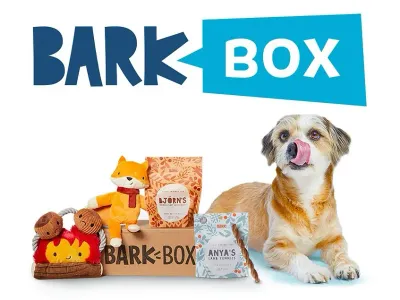
Monthly dog subscription box with 2 themed plush toys, 2 treat bags, and a chew, customized for your dog's size.
Related Guides
How to Choose Your First Subscription Box
A comprehensive guide to finding the perfect subscription box. Learn what questions to ask, what to look for, and how to avoid common pitfalls.
Understanding Subscription Box Pricing: What You're Really Paying For
Decode subscription box pricing, understand the true value proposition, and learn how to evaluate whether a subscription is worth your money.
Find Your Perfect Subscription Box
Browse our complete directory of subscription boxes with honest ratings and detailed reviews.